After more than 20 years in Asia’s training industry — running programmes, building vendors, and helping HR teams source them — I’ve watched a lot of buying decisions go wrong. Not because the vendor was bad. Because the questions asked during the selection process were the wrong ones.
Most HR teams ask vendors: “What do you offer? How much does it cost? Do you have a case study?” These are fine questions. They’re just not the ones that tell you whether this vendor will work for your specific team, in your specific context, right now.
Here are the five questions that actually matter.
-
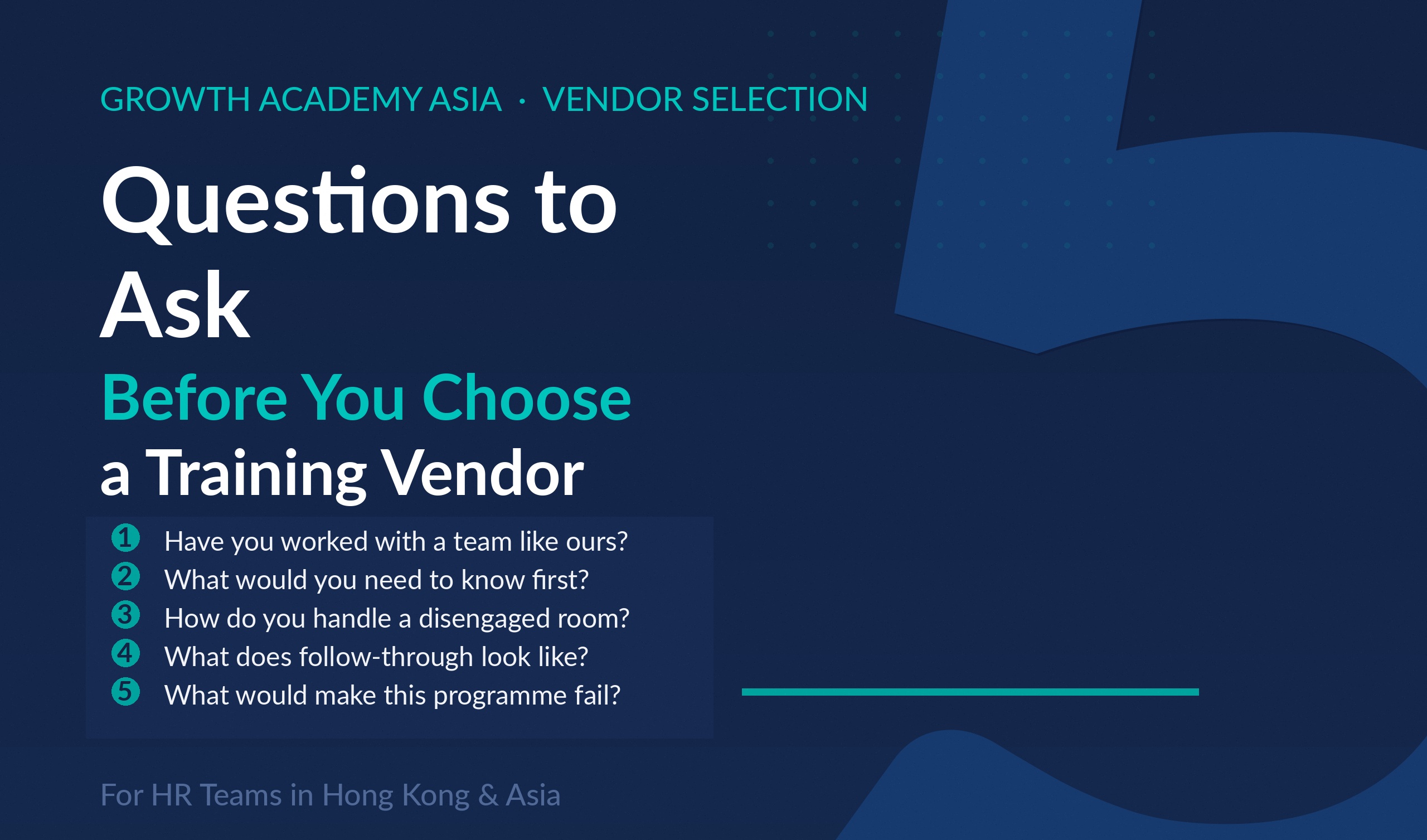
“Have you worked with a team like ours before — and what was different about it?”
Not “do you have experience in our industry.” That’s a yes/no question and you’ll always get a yes.
What you want to know is whether the vendor has genuinely thought about the nuances of your situation. A team going through rapid growth needs something different from a team dealing with restructure fatigue. A team of 30-something professionals in financial services needs a different facilitator energy then a customer-facing retail workforce does.
When you ask this question and the vendor talks specifically about the differences — what they adjusted, what they would do differently for you — you’re talking to someone who designs rather than delivers. That distinction matters more than anything on their website.
-
“What would you need to know to make this programme more effective for us?”
This one tells you a lot about how a vendor thinks.
A vendor who answers with a long list of smart questions has a collaborative design process. They treat your brief as a starting point, not a spec. They want to understand your culture, your audience’s prior experience with training, what’s happened internally that might be relevant, what success actually looks like for you.
A vendor who answers with “just send us the headcount and we’ll get you a proposal” is running on autopilot. The programme exists already. They’re just going to deliver it with your logo on the slides.
Neither is inherently wrong — sometimes you want something tried and tested and fast. But you should know which one you’re getting.
-
“How do you handle a room that isn’t engaging?”
This is the most underrated question in vendor selection and almost no one asks it.
Every programme hits resistance at some point. A group that’s been told they have to be there. A cynical senior manager who’s questioning the value. A post-lunch session where nobody wants to be in the room. How a facilitator handles those moments is the difference between a programme people talk about for months and one they forget by the time they get back to their desk.
Good facilitators have a real answer to this question. They’ll tell you about specific techniques, how they read a room, when they stop and shift versus push through. If the answer is vague or defensive, take note.
-
“What does follow-through look like after the session?”
One-day workshops with no follow-through are one of the most expensive things HR teams buy. The learning doesn’t stick, the behaviour doesn’t change, and six months later someone suggests doing it again.
The best vendors think about what happens after the room clears. That might be digital resources, manager toolkits, 30-day check-in calls, follow-up sessions, or action plans built into the programme itself. It doesn’t have to be elaborate — but there should be something.
If a vendor’s answer is “we can do a follow-up session if you want to book one,” that’s not a follow-through strategy. If they describe a structured approach to embedding learning, that’s a vendor who has thought carefully about impact rather than just delivery.
-
“What would make this programme fail?”
Most vendors will tell you what makes their programmes succeed. That’s marketing. Ask them what makes their programmes fail, and you get honesty.
A vendor who’s run enough programmes will have real answers. They’ll tell you that these workshops don’t work if leadership doesn’t model the behaviours afterwards. Or that the programme needs to be positioned to participants as development, not performance management. Or that if the team is going through a merger, this particular kind of work needs to wait three months.
This answer also tells you how much responsibility the vendor takes for outcomes versus how much they put back on you. The best vendors share accountability. They’ll tell you what they need from your side to make it work, not just what they’ll deliver on theirs.
One More Thing: Trust Your Read of the Conversation
The questions above will give you useful information. But the most reliable signal is often simpler: does this vendor seem genuinely curious about your situation, or are they waiting for you to stop talking so they can pitch?
The best training providers are people who care about what actually changes in your team after they leave the building. That curiosity shows up early, in how they ask questions and how they listen to your answers.
At Growth Academy Asia, we interview every vendor on our platform before they’re listed — and these are exactly the kinds of questions we ask them. When we match you with a provider, we’ve already done the first round of screening. Start the matching process here, and you’ll get proposals from up to 3 vetted providers within 24 hours.
Stuart Harris is co-founder of Growth Academy Asia. He has spent over 20 years working with HR teams and training providers across Hong Kong and Asia.