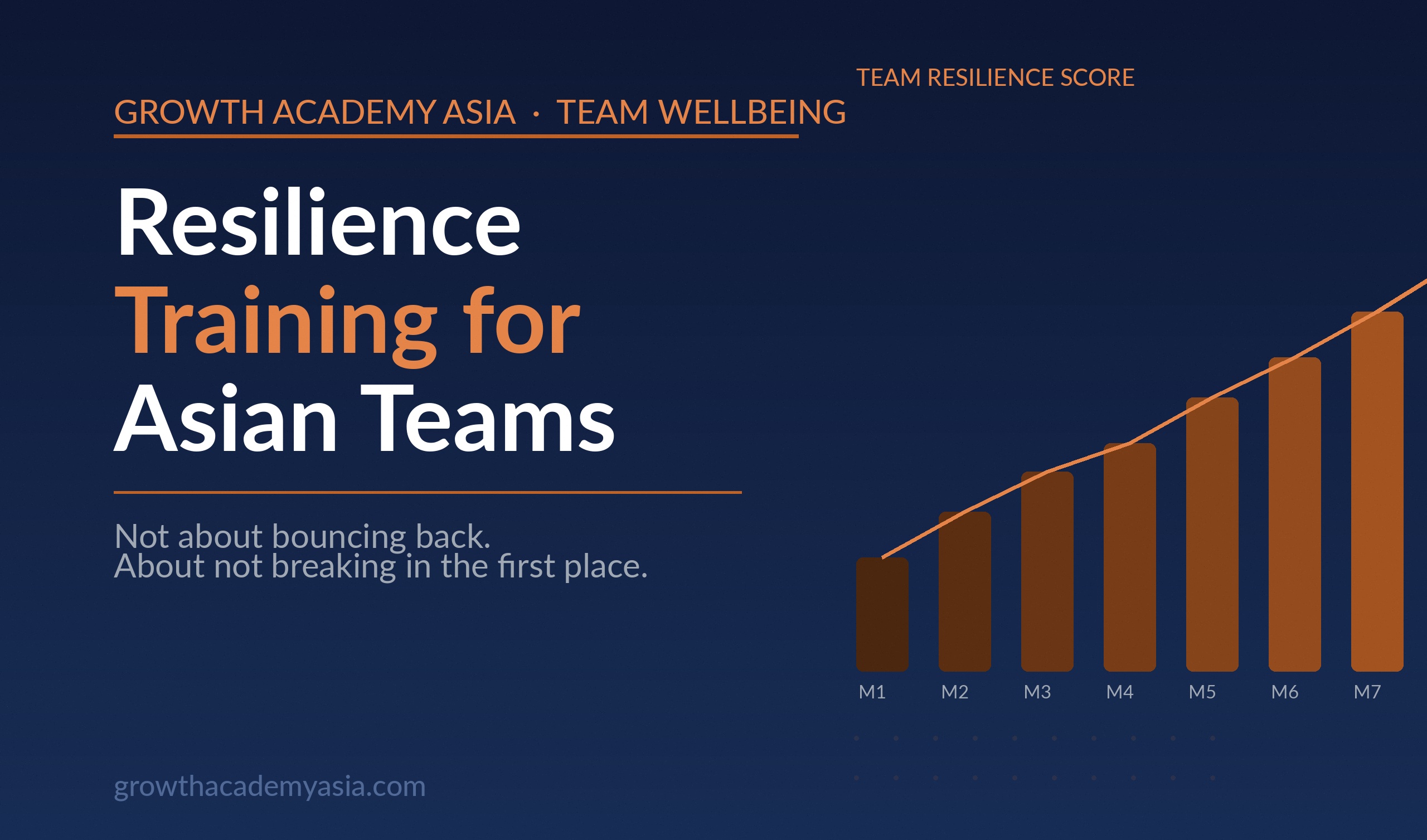
Resilience is the capacity to adapt to pressure and recover from setbacks. It is not the ability to absorb stress indefinitely, which is endurance, and training that sells it that way is doing harm. If you are buying resilience training for a team in Asia, the difference between a programme with an evidence base and a motivational day out is worth knowing before you sign.
Here is what it is, why it matters here specifically, and what to check before you buy.
What is resilience at work, and what isn’t it?
Resilience is not absorbing pressure without breaking. That framing appears in more corporate wellness content than it should, and it is both inaccurate and quietly dangerous, because it turns a skill into a character test and makes struggling a personal failure.
Resilience is the capacity to adapt effectively to adversity, challenge and change. Recovering from setbacks. Staying functional under sustained pressure. Adjusting course when things shift. It is a skill set, not a trait you either have or don’t.
At work it determines how people handle pressure, how fast they recover when something goes wrong, whether they support each other through a hard period, and how they respond to change, which in most organisations is permanent.
Why does this matter in Asia right now?
Four pressures are converging.
The pace of change. Market shifts, regulatory change, regional expansion, restructuring. Many teams are absorbing successive waves with no recovery time between them.
Sustained intensity as the norm. High-output cultures in Hong Kong and much of East Asia normalise a pace that isn’t sustainable. Teams that run hard for long periods without building recovery practices see rising attrition, falling engagement, and eventually performance dips among the people you least want to lose.
Reluctance to show struggle. In many workplace cultures here, admitting difficulty to a manager still carries social risk. Training that recognises this, and lets people build coping strategies without requiring public vulnerability, lands far better than approaches built on visible emotional openness.
Post-pandemic recalibration. Teams are still working out how to stay connected and engaged when physical presence isn’t the default. Managing workload and burnout sits alongside this as the other half of the same problem.
What does good resilience training involve?
The evidence base is reasonably well established. Effective programmes work across five dimensions.
Cognitive reframing. How people interpret a setback strongly affects how fast they recover from it. Training that helps people notice unhelpful thinking patterns builds a skill that transfers well beyond the situation that prompted it.
Emotional regulation. Not suppressing a reaction, but functioning effectively alongside it. Programmes that teach practical techniques beat programmes that explain why regulation matters.
Social connection. One of the strongest predictors of resilience is having people you can draw on. At work that means teams where asking for help is normal, which connects directly to psychological safety.
Recovery habits. Knowing when to push and when to stop. Energy management, boundaries, deliberate rest. These are usually the most counterintuitive parts in a high-output environment, and the most necessary.
Purpose. People who understand why their work matters cope better when it gets hard. Training can create space for this, but it often needs organisational work on direction and leadership to be real.
What should you check before buying?
Four markers that separate substance from surface.
- Ask what it’s based on. Programmes grounded in cognitive-behavioural approaches or positive psychology are generally more reliable than those built around motivational content. A provider who can’t name their evidence base is telling you something.
- Look for follow-through, not just a day. Resilience is built by practice. Check for reflective check-ins, manager toolkits or action planning that extends past the room.
- Check cultural calibration. A programme designed for a European or North American audience can land badly here, particularly on emotional expression and support-seeking. Facilitators with real experience in Hong Kong and Asia design differently.
- Insist on a manager element. Team resilience is shaped heavily by manager behaviour. Even a short session for leaders improves outcomes materially compared with training individuals alone.
Questions we get asked
Is resilience training just teaching people to tolerate bad conditions?
It can be, and that’s the version to avoid. If workload and management practice are the cause, resilience training alone shifts responsibility onto the people affected. Fix the conditions and build the skill, not one instead of the other.
How long does it take to work?
Individual techniques land quickly. The habits take months, which is why programmes with follow-up outperform single workshops so consistently.
Does it work where people won’t discuss struggling openly?
Yes, if it’s designed for that. Look for approaches that build individual coping skills without requiring disclosure in front of colleagues.
Should managers attend with their teams?
A separate manager session usually works better. Managers need to learn how to support resilience, which is a different conversation from building their own, and people speak more freely when their boss isn’t in the room.
Finding the right provider
Resilience is one of the easiest training categories to buy badly, because a well-received day and a lasting change look identical in the feedback form.
Providers on Growth Academy Asia who deliver this: coNEXTion and Rob Lilwall.
Growth Academy Asia matches HR and L&D teams with vetted providers across Hong Kong and Asia, including wellness and resilience specialists. We don’t deliver training ourselves, and we don’t take payment for recommending one provider over another. We interview every provider before they join the platform, and we match on fit against your brief. Tell us what you need and you’ll get proposals from up to 3 vetted providers within 24 hours, or browse the directory.
Stuart Harris is co-founder of Growth Academy Asia. He has spent over 20 years working with HR teams and training providers across Hong Kong and Asia.