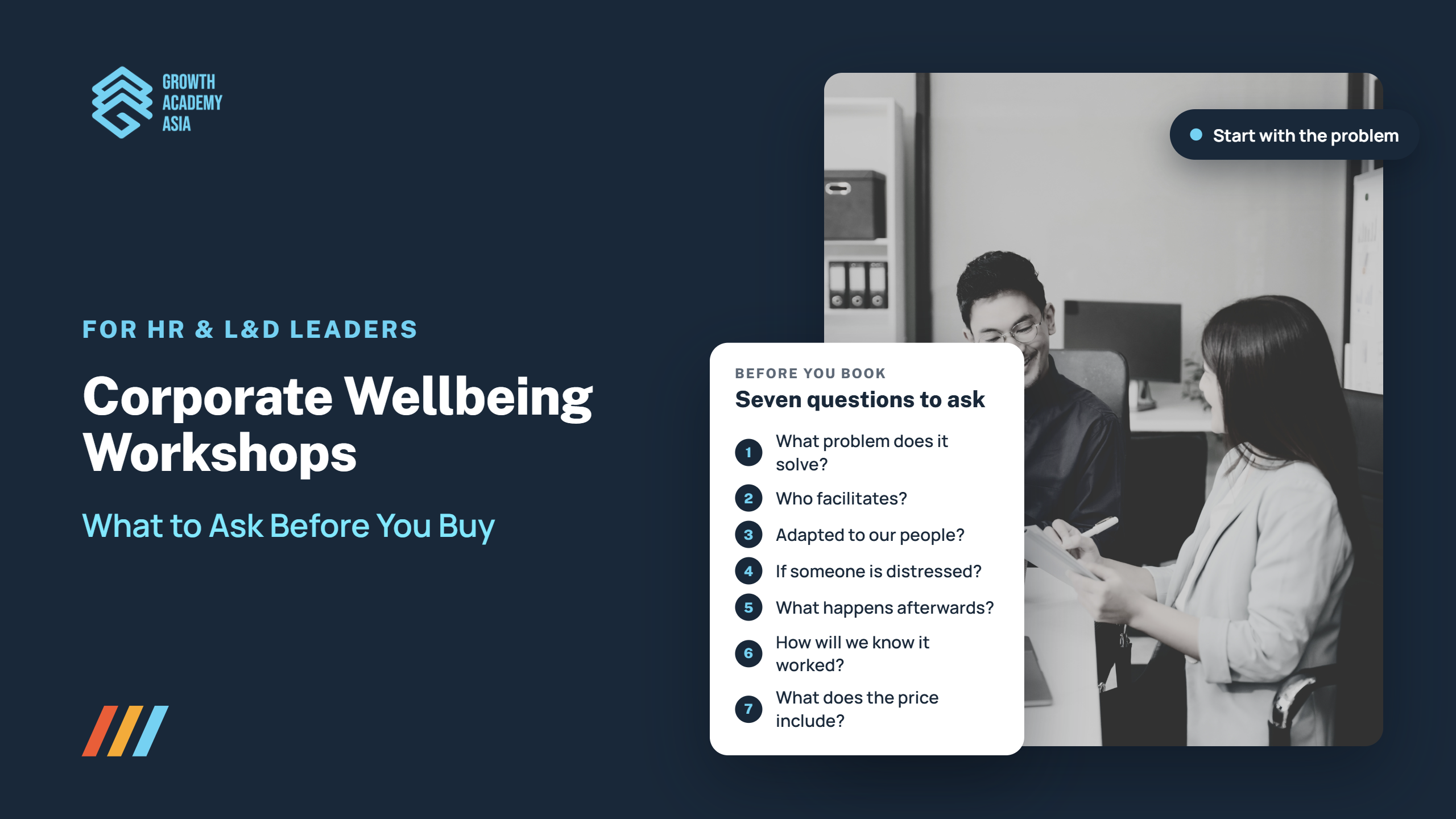
Before you book a corporate wellbeing workshop, ask the provider seven things: what problem it solves, who facilitates and what their training is, how it’s adapted to your people, how sensitive moments are handled, what happens afterwards, how you’ll know it worked, and what’s included in the price. The answers tell you more than the brochure.
Wellbeing is one of the easiest workshops to book and one of the hardest to get right. In my experience, the ones that disappoint were usually bought as an event. A date in the calendar, a nice session, and nothing different on Monday.
The ones that work start with a clear problem and a provider who asked good questions about it.
Why do wellbeing workshops disappoint?
Three reasons come up again and again.
- The topic was chosen, not the problem. “Stress management” is a topic. “Our client teams are working late for the third quarter running and sick days are up” is a problem.
- It was a one-off. A single lunchtime session rarely changes how a team works.
- It put the fix on the individual. If the cause is workload or how managers lead, breathing exercises won’t touch it, and staff notice.
What should you ask a wellbeing provider?
- What problem is this session designed to solve? A good provider asks you this first. If they lead with the agenda, be careful.
- Who will facilitate, and what’s their background? Wellbeing covers everything from sleep and nutrition to mental health. Ask about the facilitator’s qualifications for the subject they’ll teach.
- How will you adapt it to our people? Shift workers, a sales floor and a regional leadership team need different sessions. So do rooms that mix languages and cultures, which is most rooms in Hong Kong and Singapore.
- What happens if someone becomes distressed? A facilitator working on mental health topics should have a clear answer, and should know where your Employee Assistance Programme or other support sits.
- What happens after the session? Follow-up materials, a manager briefing, a second touchpoint. Something that carries it past the day.
- How will we know it worked? Ask what they measure and what they’d expect to change.
- What does the price include? Design time, materials, follow-up, travel, and the group size it’s based on.
What should you put in the brief?
The same five things as any training brief, with a little more care on two of them.
- The audience. Who, how many, and how they work. Office hours or shifts, on site or remote.
- The problem. What you’re seeing. Survey results, turnover in one team, feedback from managers. Share what you can without naming individuals.
- The context. A restructure, a busy season, a recent incident. Tell the provider. It changes the tone of the room.
- The constraints. Session length, format, language, dates and a rough budget range.
- What success looks like. Be realistic. One workshop won’t fix burnout. It can give people shared language, practical tools, and a clear route to support.
If you don’t have a brief format, our free training brief template covers all five on one page.
How do you judge whether it worked?
Don’t stop at the feedback form. People nearly always enjoy a wellbeing session. Ask instead what they did differently two or four weeks later, and ask managers what they noticed. If you run an engagement or pulse survey, look at the relevant questions for that group the next time round.
Frequently asked questions
How long should a corporate wellbeing workshop be?
Long enough to practise something, not only hear about it. A short talk raises awareness. A half-day or a short series gives people time to try the tools.
Is one wellbeing workshop enough?
Rarely on its own. It works best as part of something wider, such as manager training, clear policies and access to support.
Should managers attend with their teams?
Often it’s better to brief managers separately. People speak more openly without their manager in the room, and managers need different content on how to support a team.
Can a wellbeing workshop replace an Employee Assistance Programme?
No. A workshop builds awareness and skills for a group. An Employee Assistance Programme gives individuals confidential support. Most organisations need both.
Related reading: choosing an HR service provider and how to write a training brief.
Looking for a wellbeing provider? Send one brief and get proposals from up to 3 vetted providers within 24 hours. It’s free for HR and L&D teams: https://growthacademyasia.com/biz/match-me-now